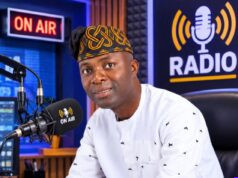

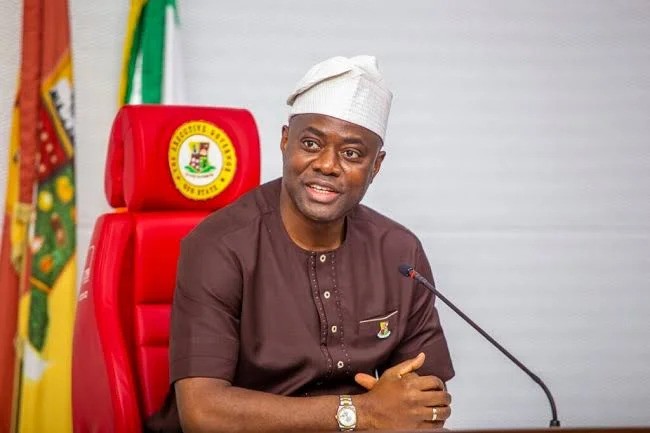

In Nigeria’s contemporary political landscape, ideology has thinned, party loyalty has weakened, and ambition has become the most consistent organising principle. Within this fluid environment, political survival increasingly depends on adaptability rather than conviction. Few politicians illustrate this reality more clearly than Governor Seyi Makinde of Oyo State, whose recent hobnobing with opposition bigwigs across party lines reflects what may best be described as chameleonic politics.
Chameleonic politics is not necessarily immoral; it is strategic. It is the ability to change posture, tone, and alliances in response to shifting political climates while remaining relevant within the elite power structure. In a system such as Nigeria’s—where parties lack ideological depth and politics is elite-driven—this strategy often appears rational. Yet it also raises fundamental questions about ambition, opposition politics, and democratic substance.
Governor Makinde’s second-term victory liberated him from immediate electoral anxieties and opened the space for national calculations. Since then, his political behaviour has taken on a more expansive character. He has positioned himself as a central figure within the opposition, even as he maintains warm relations with actors outside his party. These engagements are frequently justified as consultations in the national interest or governance-driven interactions. However, they also serve a more strategic function: elite positioning for future relevance beyond Oyo State.

Political theory helps us understand this behaviour. Rational choice theorists argue that political actors are utility maximisers who adjust their strategies to achieve desired outcomes within structural constraints. In Nigeria, where ideological politics is weak and elite alliances are fluid, it is rational for ambitious politicians to cultivate relationships across factional and party boundaries. Makinde’s politics fits neatly into this logic.
At the same time, elite theorists such as Vilfredo Pareto remind us that political systems are sustained not by ideology but by the circulation and recomposition of elites. In Nigeria, elite circulation rarely produces ideological change; it merely reshuffles access to power. Makinde’s hobnobbing with opposition bigwigs should therefore be seen less as coalition-building in the democratic sense and more as elite networking—an insurance policy against political isolation.
This strategy becomes more significant when viewed against the backdrop of the crisis within the Peoples Democratic Party (PDP). As internal fractures deepen, Makinde has emerged as both a critic of entrenched interests and a beneficiary of elite instability. While he presents himself as a defender of party autonomy and internal democracy, his broader political conduct suggests a willingness to transcend party boundaries when personal ambition requires it.

Here lies the contradiction.

Opposition politics, in theory, is meant to offer a coherent alternative vision to the ruling order. In practice, Nigerian opposition often functions as what scholars call accommodative opposition—publicly critical but privately cooperative. Makinde’s posture increasingly reflects this model. He remains oppositional enough to retain symbolic capital, yet flexible enough to avoid confrontation with dominant power blocs.
This approach may be politically intelligent, but it comes at a cost. When opposition figures prioritise elite consensus over popular mobilisation, opposition loses its transformative capacity. Politics becomes a negotiation among elites rather than a contest of ideas or programmes. Citizens are reduced to spectators in a game whose outcomes rarely alter their material conditions.
There is, of course, nothing inherently wrong with ambition. Democracy itself, as Joseph Schumpeter argued, is a competition among elites for popular consent. However, ambition detached from ideology, structure, and mass engagement risks becoming purely self-referential. Makinde’s chameleonic politics, while tactically effective, appears weakly anchored in a clearly articulated national project.
The danger is not that Makinde is too pragmatic, but that pragmatism becomes an end in itself.
In the long run, adaptability without ideological anchorage breeds cynicism. It reinforces the belief that all politicians are interchangeable and that opposition is merely a staging ground for future accommodation. For a country grappling with economic hardship, insecurity, and democratic fatigue, this is a costly illusion.
Governor Seyi Makinde’s politics thus reflects a broader crisis of Nigerian democracy: a system that rewards political intelligence but discourages political transformation. Whether his ambition ultimately matures into a meaningful national vision or dissolves into elite self-preservation remains to be seen.
For now, the chameleon survives—changing colours, navigating power, and waiting for the next opening.
By Adekola Afeez Adegoke