

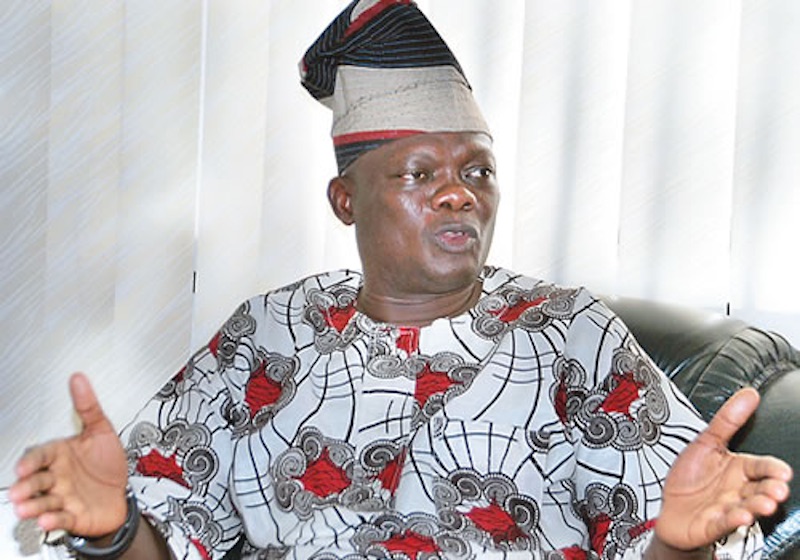

In the turbulent landscape of party politics in Oyo State, Senator Teslim Kolawole Folarin stands out as a political enigma whose resilience, restraint, and strategic patience demand scholarly interrogation. While the 2023 general elections exposed deep fractures within the Oyo State chapter of the All Progressives Congress (APC), Folarin’s post-election conduct has revealed a level of political maturity and statesmanship that transcends the immediate calculus of electoral victory or defeat.
Political science literature distinguishes between electoral success and political relevance. Joseph Schumpeter’s minimalist conception of democracy places elections at the centre of political legitimacy, but modern democratic theory—particularly elite theory and political institutionalism—recognises that influence, agenda-setting, and coalition-building often outlive electoral outcomes. Senator Folarin’s trajectory since 2023 affirms this latter proposition.
Despite facing intense internal gang-ups, factional sabotage, and elite defections within the APC during the 2023 gubernatorial contest, Folarin resisted the temptation of post-defeat recrimination. Instead, he adopted what Samuel Huntington would describe as institutional loyalty over personal grievance—a rare attribute in Nigeria’s factionalised party system. Rather than weaken the party through exit, silence, or parallel structures, he chose engagement, reconciliation, and elite bargaining.

This approach aligns with the theory of political maturation, which emphasises a transition from ambition-driven politics to system-preserving statesmanship. In comparative politics, leaders who survive internal betrayal often radicalise or disengage. Folarin, however, pursued what Robert Putnam terms two-level political games: managing elite negotiations at the national level while stabilising grassroots confidence within Oyo APC.
His recent visits to strategic national figures, including the Honourable Minister of Power, are not casual courtesies but calculated exercises in vertical integration of political influence. In federal systems, access to national power centres strengthens sub-national party cohesion by signalling relevance, bargaining capacity, and future opportunities. Folarin’s engagement at this level repositions Oyo APC not as a defeated opposition enclave, but as a viable stakeholder in national governance.
More significantly, his deliberate moves to unite the fractured Oyo APC reflect a grasp of party system consolidation. Giovanni Sartori warned that parties collapse not only from electoral losses but from unresolved internal schisms. Folarin’s reconciliatory outreach to aggrieved blocs within the party demonstrates a preference for organisational survival over factional dominance. This is the hallmark of a statesman rather than a mere contender.


The 2023 elections also tested Folarin’s political psychology. Political behaviour theory suggests that repeated exposure to elite betrayal often produces cynicism or authoritarian control instincts. Yet, his conduct reveals what leadership scholars describe as adaptive resilience—the capacity to absorb shocks without abandoning long-term vision. By refusing to personalise institutional failures, he preserved his moral authority within the party.
In the context of Oyo politics, where personal networks often override ideological coherence, Folarin’s insistence on party unity signals a strategic recalibration. He appears to understand that future political dominance in Oyo APC will not be achieved through factional supremacy but through coalition enlargement, elite accommodation, and credibility rebuilding.
Furthermore, his continued relevance despite the 2023 odds confirms Vilfredo Pareto’s theory of elite circulation: elites who adapt survive, while those who cling rigidly to past strategies fade. Folarin’s post-2023 evolution reflects adaptability rather than desperation. He has shifted from candidate-centric mobilisation to party-centric reconstruction.
Ultimately, Senator Teslim Kolawole Folarin’s political maturity lies not in triumphalism but in restraint; not in noise but in negotiation; not in vengeance but in vision. In a political culture addicted to immediate victories, his conduct represents a long-term investment in institutional relevance.
History often vindicates politicians who understand that elections are episodes, but political capital is cumulative. In this sense, Folarin’s current strides within Oyo APC may yet prove more consequential than the electoral contest he lost in 2023.
Whether Oyo APC fully consolidates around this vision remains to be seen. But one thing is clear: Teslim Folarin’s politics has entered a phase that demands scholarly attention—not as a tale of defeat, but as a study in political maturity under adversity.