

Politics, in its noblest conception, is meant to be a contest of ideas, performance, and competing visions for societal progress. However, when political discourse degenerates into reckless insinuations and historical distortions, it becomes necessary for responsible voices to restore clarity and context.
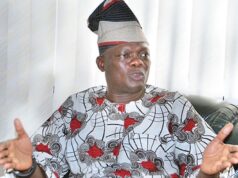
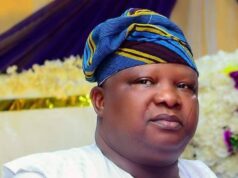
The recent statement credited to a spokesperson of the Peoples Democratic Party (PDP) in Oyo State attacking the newly elected chairman of the All Progressives Congress (APC) in the state, Moses Alake Adeyemo, is a classic example of political grandstanding built on exaggeration, selective memory, and deliberate misrepresentation of history.
A Party in Crisis Should First Look Inward

The first irony in the statement is that it comes from a party that is currently engulfed in protracted internal crises at the national and state levels. Across Nigeria, the PDP is struggling with factional leadership disputes, litigations, and unresolved structural conflicts among its own members.
Political maturity demands that a party confronting such internal turbulence should focus its energy on rebuilding cohesion and ideological clarity, rather than launching unnecessary attacks on opponents.
It is therefore surprising that a spokesperson of the ruling party in Oyo State finds the time to meddle in the internal affairs of another political party while their own political house requires urgent repair.

Respect for Political Experience and Public Service
Chief Moses Alake Adeyemo is not a novice in public service. As a former Deputy Governor under the late Abiola Ajimobi, he served in one of the most politically challenging periods in the history of Oyo State.
The Ajimobi administration inherited a state that was grappling with deep institutional weaknesses, infrastructural deficits, and administrative stagnation. Yet under that administration, several efforts were made to reposition governance structures and restore order to the state’s urban management system.
History will record that the Ajimobi era pursued reforms in urban renewal, security coordination, and civil service restructuring aimed at modernizing governance in the state.
Reducing that entire eight-year administration to caricatures of “maladministration” is not only intellectually dishonest but also politically motivated.
Selective Amnesia in Political Criticism
One striking feature of the PDP spokesperson’s commentary is selective amnesia.
It is convenient to attack former office holders, yet ignore the realities confronting the present administration. Today, many residents of Oyo State continue to express concerns about:
The rising debt profile of the state government
Widespread demolitions in urban areas
Questions surrounding compensation for affected property owners
The pace and quality of infrastructural development relative to borrowed funds
While urban planning is necessary for modern cities, governance must be anchored on fairness, transparency, and adequate compensation mechanisms.
Public infrastructure development should also reflect visible value proportional to public borrowing, as fiscal prudence remains a cardinal principle of responsible governance.
The Question of Democratic Tolerance

In a vibrant democracy, opposition parties play a fundamental role. Their duty is to scrutinize government policies, propose alternatives, and hold leaders accountable.
Attempts to intimidate or delegitimize opposition figures simply because they have assumed party leadership roles undermine democratic culture.
The emergence of Chief Adeyemo as APC chairman in Oyo State should therefore be viewed through the lens of internal party democracy, not through personal attacks.
Politics Should Not Degenerate Into Personal Hostility
It is unfortunate that the statement directed at an elder statesman adopted a tone bordering on disrespect. Nigerian political culture has historically placed high value on respect for age, service, and institutional experience.
Criticism is legitimate in politics, but it must remain issue-based rather than personality-driven.
What Should Concern the People of Oyo State
Ultimately, the citizens of Oyo State are less interested in partisan exchanges and more concerned about tangible outcomes:
Sustainable economic growth
Job creation for young people
Transparent fiscal management
Quality education and healthcare
Infrastructure that improves everyday life
Political actors—whether in government or opposition—must focus their energy on solutions rather than rhetorical battles.
Conclusion: Politics of Ideas, Not Insults
The path forward for Oyo State politics should not be paved with hostility or propaganda. It should be anchored on dialogue, accountability, and constructive competition.
If the PDP truly believes in its governance record, it should present empirical evidence of progress, rather than resorting to inflammatory commentary about political opponents.
Likewise, the APC and its leadership must continue to engage citizens with policy alternatives and credible visions for the future of Oyo State.
Democracy thrives not on insults but on ideas, integrity, and performance.
And in the end, it is the people of Oyo State who will decide which political vision deserves their trust.
— Adekola Afeez Adegoke