


In The Republic, the Greek philosopher Plato advanced one of the most radical ideas in political thought: societies would only become just when philosophers become kings, or when kings become philosophers.
For Plato, leadership was never meant to be a contest of popularity or rhetorical excitement. Instead, it was a matter of wisdom, character, and deep understanding of society. Rulers, he argued, must be individuals who have spent years learning, reflecting, and participating in public life before assuming authority.
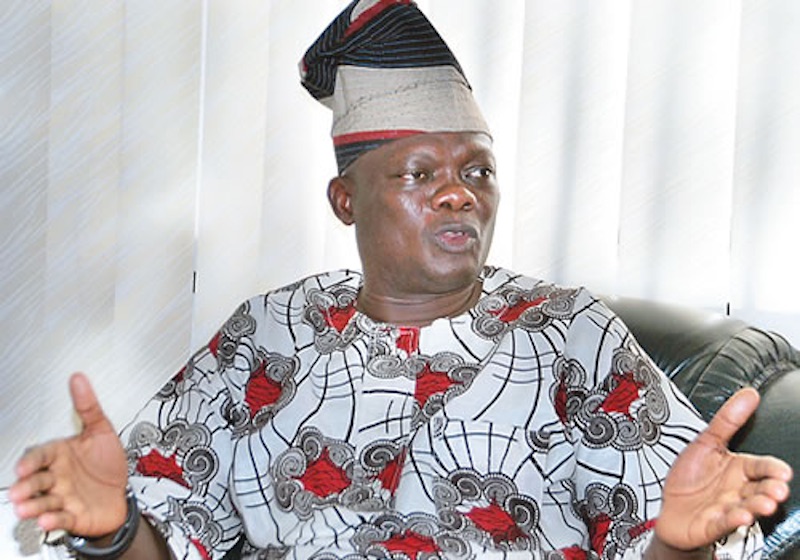
The relevance of this philosophical proposition becomes striking when one observes the trajectory of Senator Teslim Kolawole Folarin, whose political journey reflects the gradual formation of experience, institutional knowledge, and political maturity that Plato believed essential for governance.

Experience as the School of Wisdom
Unlike many politicians who arrive suddenly on the political stage, Folarin’s public life has been shaped by decades of engagement within Nigeria’s democratic institutions.
He served as a three-term Senator representing Oyo Central, rising at one point to become Senate Leader of the Federal Republic of Nigeria. Within the complex arena of the National Assembly of Nigeria, such a position is not merely ceremonial. It requires negotiation, coalition-building, legislative strategy, and a deep understanding of the machinery of government.

Plato believed rulers must first understand the structure of society before attempting to lead it. Folarin’s long participation in national politics—spanning legislative debates, party negotiations, and federal policy discussions—has provided exactly that kind of political apprenticeship.
Leadership Beyond Ambition
In Plato’s framework, the most dangerous rulers are those who seek power primarily for prestige or dominance. The ideal ruler is someone whose experience has tempered ambition with prudence.
Throughout the shifting currents of Oyo politics, Folarin has remained a constant figure, navigating alliances, electoral contests, and political transitions. Such endurance in politics is rarely accidental. It reflects the capacity to adapt, negotiate, and maintain relationships across political divides.
These are precisely the qualities Plato believed distinguished wise rulers from mere power seekers.
Knowledge of the State
Plato insisted that rulers must be educated not only in philosophy but in mathematics, ethics, and governance, so that decisions would be guided by rational judgment rather than impulse.

In contemporary politics, this philosophical education often translates into institutional knowledge. Having served at the national legislative level, Folarin has participated directly in discussions on federal budgets, constitutional questions, and national policy frameworks affecting states like Oyo.
This exposure offers a strategic advantage for state leadership, because governance at the state level increasingly requires an understanding of federal systems, fiscal negotiations, and intergovernmental diplomacy.
The Oyo 2027 Question
As Oyo State gradually moves toward the political horizon of 2027, the central question facing the electorate echoes Plato’s ancient dilemma:
Should leadership be determined by momentary popularity,
or by tested wisdom and institutional experience?
If leadership is viewed through Plato’s philosophical lens, then the argument becomes clearer. Governance demands individuals who have studied power, experienced its challenges, and learned from its consequences.
From the Senate chambers in Abuja to the political landscape of Oyo State, Teslim Kolawole Folarin’s trajectory reflects the kind of political schooling that Plato believed was necessary before power should be entrusted to any leader.
Plato’s Lesson for Modern Politics
Plato did not necessarily expect philosopher kings to exist perfectly in reality. Rather, his idea served as a moral challenge to societies: choose leaders whose wisdom equals their ambition.
In the evolving political narrative of Oyo State, supporters of Senator Folarin argue that his long experience, legislative exposure, and political resilience place him close to that philosophical ideal.
Whether the electorate ultimately agrees will be decided in 2027.
But Plato’s ancient question still lingers over modern democracy:
Should those who govern simply desire power…
or should they first understand it?